
Mineral County Family Court Records
Mineral County is a small county in the San Juan Mountains. It is part of the 12th Judicial District. Creede serves as the county seat. The Mineral County Courthouse handles all family cases here. You can find divorce records and custody orders at this court. The staff keeps these files open for public view. This helps people who need copies of court papers.
The 12th Judicial District serves six counties in south central Colorado. These include Alamosa, Conejos, Costilla, Mineral, Rio Grande, and Saguache. Mineral County is the smallest by population. The court system works to serve all residents fairly. Access to records follows state public records law. This law ensures most court files remain open to view.
Family cases in Mineral County follow the same rules as larger counties. Divorce cases must meet state law. Child custody uses the best interest standard. The court hears these cases in Creede. Records stay on file for many years.
Where to Find Mineral County Family Court Records
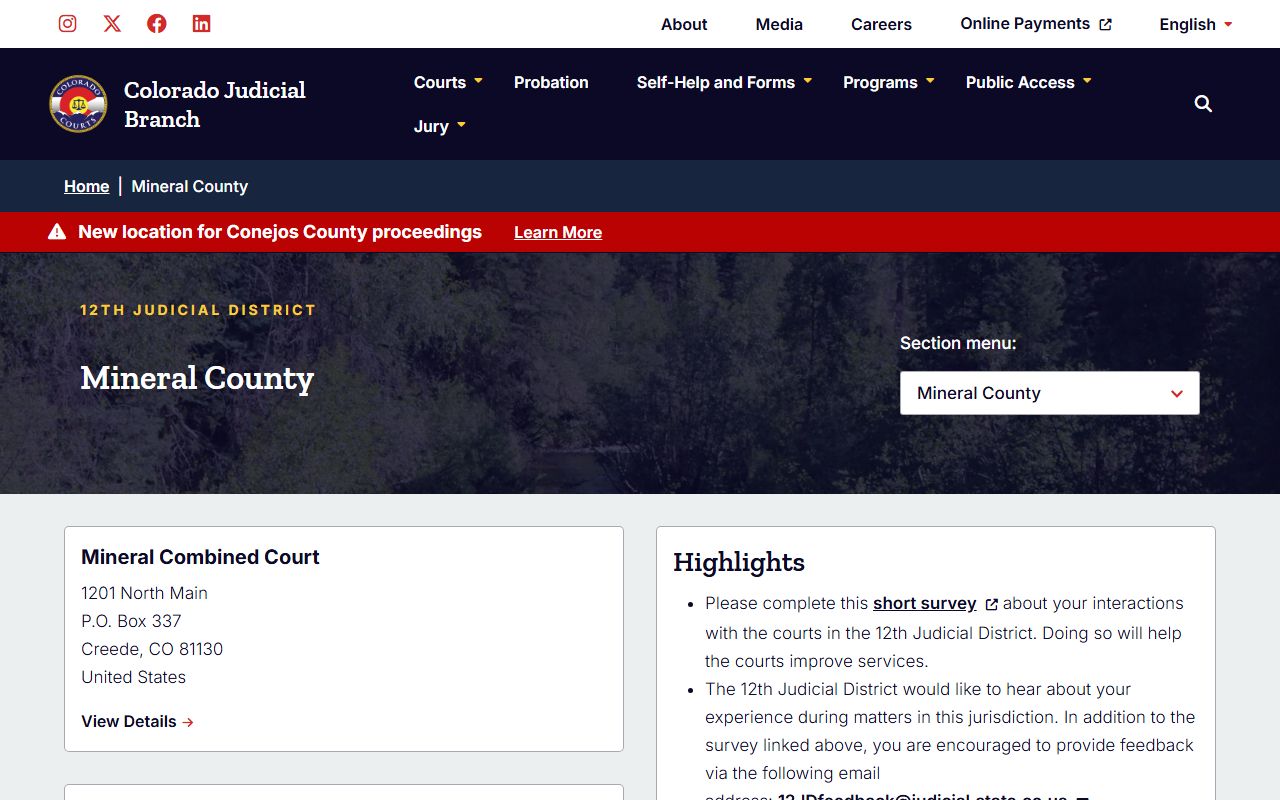
The Mineral County Courthouse sits at 1201 North Main Street in Creede. This is the only place to get family court records in the county. The building houses both court and clerk offices. All case files are stored here. You can visit during normal business hours. It helps to call first. The phone number is (719) 658-2440. Staff can check if your file is ready.
Mineral County is remote. It sits high in the mountains. The town of Creede is small but serves as the center of local government. People from nearby towns must travel here for court business. The drive can be long in winter. Always check road conditions before you come.
Types of Family Court Records in Mineral County
Mineral County keeps standard family court records. Divorce decrees are the most common type. These papers prove a marriage has ended. They show how property was split. They list child custody terms too. You may need a certified copy for legal use. The court can make one for you.
Other records include custody and support orders. These come from cases about children. The court decides where kids will live. It sets visit times for the other parent. Child support orders state how much must be paid. All these records are public in most cases.
Protection orders are also filed here. These help keep people safe from harm. The court can order someone to stay away. Records of these orders are public. Some details may be sealed for safety reasons.
Requesting Family Court Records in Mineral County
To get records from Mineral County, start with a phone call. Call the courthouse at (719) 658-2440. Ask if they have the file you need. Give them the names of the parties. Tell them the year if you know it. Staff can search for the case. They will tell you what they find.
You can visit the court in person. This is often faster. Bring a photo ID with you. Know the case details if you can. Staff can pull the file while you wait. Copies cost a fee per page. Certified copies cost more. These are needed for official use.
Mail requests work too. Write a letter to the court. State what records you need. Include names and dates. Add payment for copies. Include a self-addressed envelope. The court will mail the records to you.
Online Search Options for Mineral County
Colorado offers online access to court records. This includes cases from Mineral County. The Colorado Judicial Branch website lets you search by name. You can also search by case number. Basic case info is free to view. This includes status and hearing dates.
Not all documents are online. Some older cases may not be in the system. For full records, you may need to visit the court. The online tool works best for recent cases. It updates each day.
Here are ways to search online:
- Use cocourts.com for case lookup
- Check case status and upcoming hearings
- Find party names and case numbers
- View some documents for a fee
Legal Resources in Mineral County
Legal help in Mineral County is limited due to its small size. The court may have self-help forms. These help people without lawyers. Forms cover divorce and custody. They also cover child support. Ask the clerk what is available.
The court follows state records request rules. These rules set time limits for responses. They also set fees. The court must follow C.R.S. § 24-72-201 and C.R.S. § 24-72-203. These laws say most records are public. You have a right to view them.