
Moffat County Family Court Records
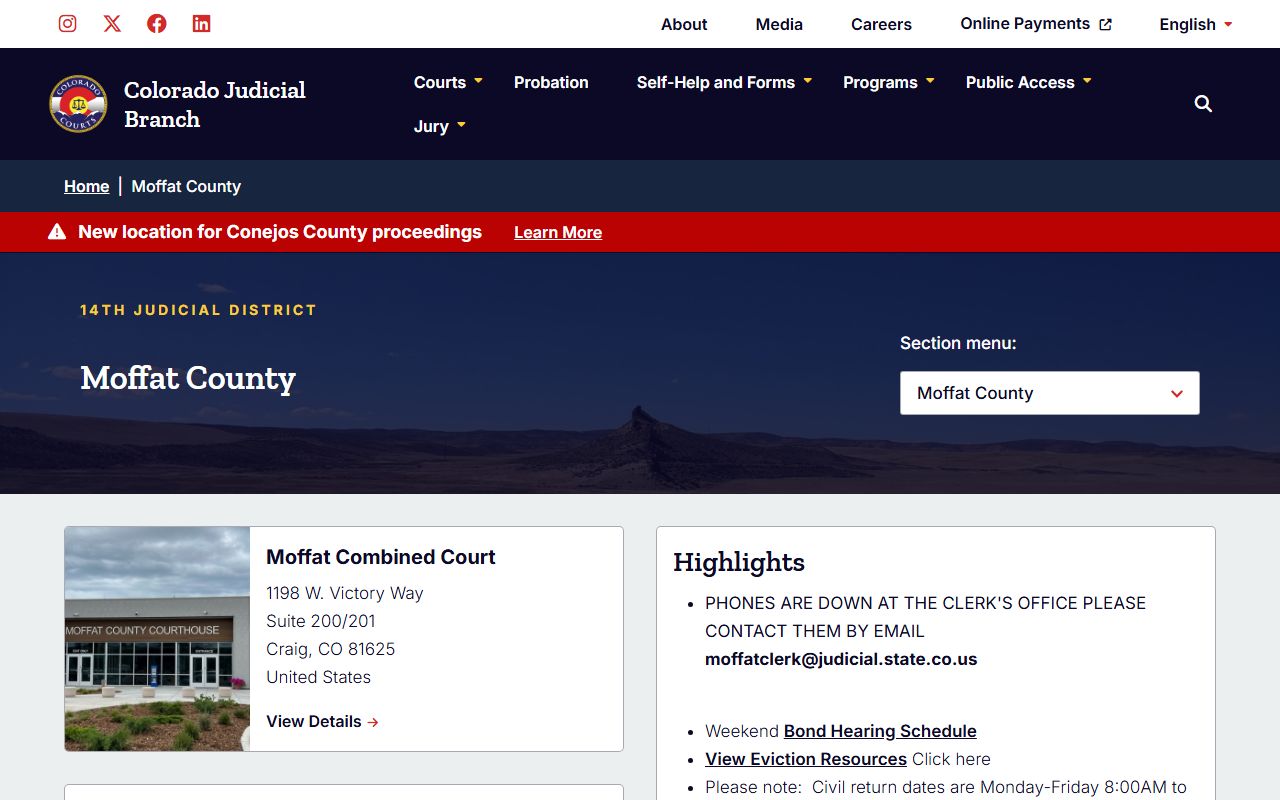
Moffat County sits in the northwest corner of Colorado. It is part of the 14th Judicial District. Craig serves as the county seat. The Moffat County Courthouse handles all family court cases. You can find divorce records, custody orders, and support documents here. These records are open to the public under state law.
The 14th Judicial District includes three counties. These are Grand, Moffat, and Routt. The district covers a large area of northwest Colorado. Moffat County is known for its ranch land and energy resources. The court serves residents across this rural area. Staff work to keep records organized and easy to find. Access to these files is protected by Colorado public records law.
Family cases in Moffat County follow state rules. Divorce cases end marriages. Custody cases decide where children live. Support orders set payment amounts. The court hears these cases in Craig. Records stay on file for public access.
Where to Find Moffat County Family Court Records
The Moffat County Courthouse is at 221 West Victory Way in Craig. This building houses all court offices. Family court records are stored here. You can visit in person during business hours. Staff can help you find what you need. Call (970) 824-8250 before you come. They can confirm the file is ready.
Craig is the largest town in Moffat County. It sits along U.S. Highway 40. The courthouse is easy to find. It is near the center of town. Parking is available on the street. The building is open on weekdays. Hours may vary on holidays.
You can also request records by mail. Send a letter to the courthouse. Include case details. State what documents you need. Add payment for copies. The court will mail records to you.
Types of Family Court Records in Moffat County
Moffat County keeps many types of family records. Divorce decrees are most common. These papers show a marriage has ended. They list terms for property division. They include child custody plans. You may need a certified copy. The court can provide one.
Custody orders are also on file. These state where children will live. They set visit times for the other parent. Child support orders show payment amounts. They list when payments are due. All these records are public in most cases.
Protection orders are filed here too. These help people stay safe. The court can order someone to stay away. Records of these orders are public. Some details may be sealed.
Requesting Family Court Records in Moffat County
Getting records from Moffat County is simple. Start with a phone call. Dial (970) 824-8250. Ask about the case you need. Give the names of the parties. Tell them the year if you know it. Staff can check if the file exists.
Visiting in person is fastest. Bring photo ID. Know the case details. Staff can pull the file while you wait. Copies cost a fee per page. Certified copies cost more. You might need one to remarry. You might need one to change your name.
The court follows C.R.S. § 24-72-201 and C.R.S. § 24-72-203. These laws say most records are public. You have a right to view them. Some records may be sealed. Adoption records are one example.
Online Search Options for Moffat County
Colorado offers online tools for court records. The Colorado Judicial Branch website has a search tool. You can look up Moffat County cases. Search by name or case number. Basic info is free. This includes case status and hearing dates.
Some documents cost money to view. Full records may require a court visit. The online system works best for recent cases. It updates daily. Older cases may not be in the system.
Here are ways to search:
- Use cocourts.com for case lookup
- Search by party name or case number
- View case status and hearing dates
- Access some documents for a fee
Legal Resources in Moffat County
The 14th Judicial District has resources for self-represented parties. The court may have forms and guides. These help people without lawyers. Ask the clerk what is available. Forms can help with divorce. They can help with custody too.
Court fees follow state law. C.R.S. § 13-32-104 sets the amounts. You can ask for a fee waiver if you cannot pay. Forms are at the courthouse. Staff can explain the process.
Mediation may help solve disputes. It can be cheaper than court. It can be faster too. Ask the court about mediation services.